
When Reality Becomes Too Dangerous to Name
Fear, Flow, and the Fate of Organisations

TL;DR Under pressure, emotion spreads. Sometimes it sharpens collective effort. Sometimes it silences it. The difference comes down to whether leaders make reality discussable or make it dangerous to name.
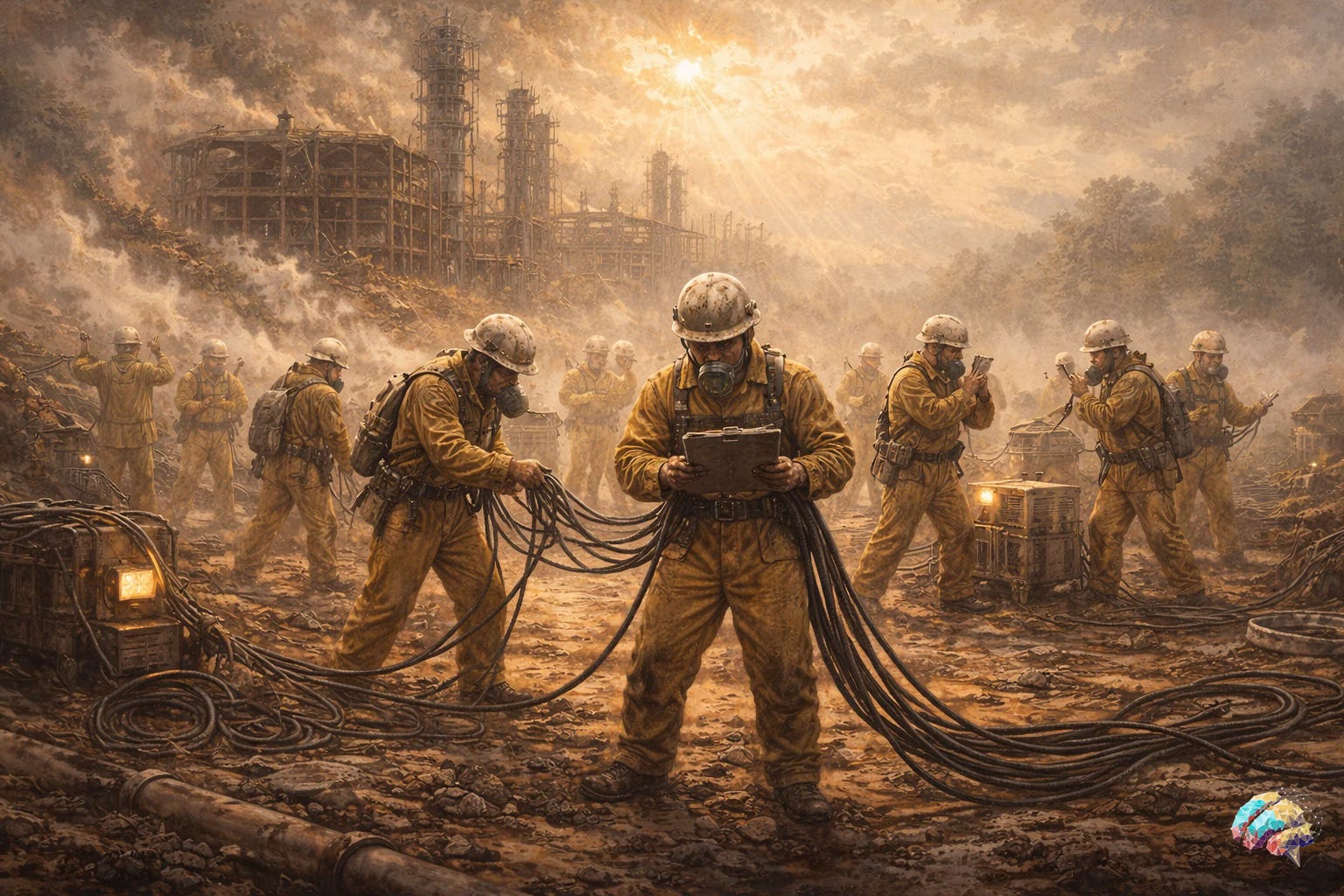
On 11 March 2011, a magnitude 9.0 earthquake struck Japan, followed by a tsunami that devastated the country’s north east coast. The disaster badly damaged the Fukushima Daini nuclear power station. The cooling systems failed, the infrastructure was torn apart, and unless the reactors could be stabilised, the consequences would be catastrophic.
By any normal reading of human behaviour, this should have produced paralysis.
The workers at Fukushima Daini were operating under extreme pressure, with limited information and every reason to think first about self preservation. Yet over the next 30 hours, employees and contractors laid roughly nine kilometres of heavy industrial cable across a broken nuclear site, restoring power and helping bring all four reactors to a safe cold shutdown.
Under ordinary conditions, it was the sort of job that might have taken weeks, with machinery, planning time, and far calmer surroundings. Here, it happened in the wake of an earthquake and tsunami, with aftershocks still rolling through, exhaustion building, and the risk of catastrophe hanging over their every move.
When we talk about crisis, we often assume fear is the dominant force. Sometimes it is. But crisis can also produce a different kind of alignment. Emotion stops being merely individual and starts moving socially. Under some conditions that produces contraction, but under others, it produces coordination.
From the outside, performances like this can look like heroism or discipline. That does not quite capture it. Something more collective is happening. Psychologists describe one version of this as collective flow, a shared state in which attention aligns, feedback is immediate, and action becomes coordinated without heavy direction. The group starts to function less like a collection of individuals and more like a system.
There is another force at work too. Motivation does not stay contained within individuals. Motivation contagion is the way one person’s energy and intent moves through a group, lifting effort, focus, and belief. Just as hesitation can ripple through a team, so can commitment.
And that is what makes the contrast with many organisations so striking.
Under pressure, some groups become more coherent. Others become more brittle.
That difference often has less to do with intelligence or resources than with how emotion is handled when the stakes rise.
When Fear Takes Hold
“Collective fear stimulates herd instinct, and tends to produce ferocity toward those who are not regarded as members of the herd.” — Bertrand Russell
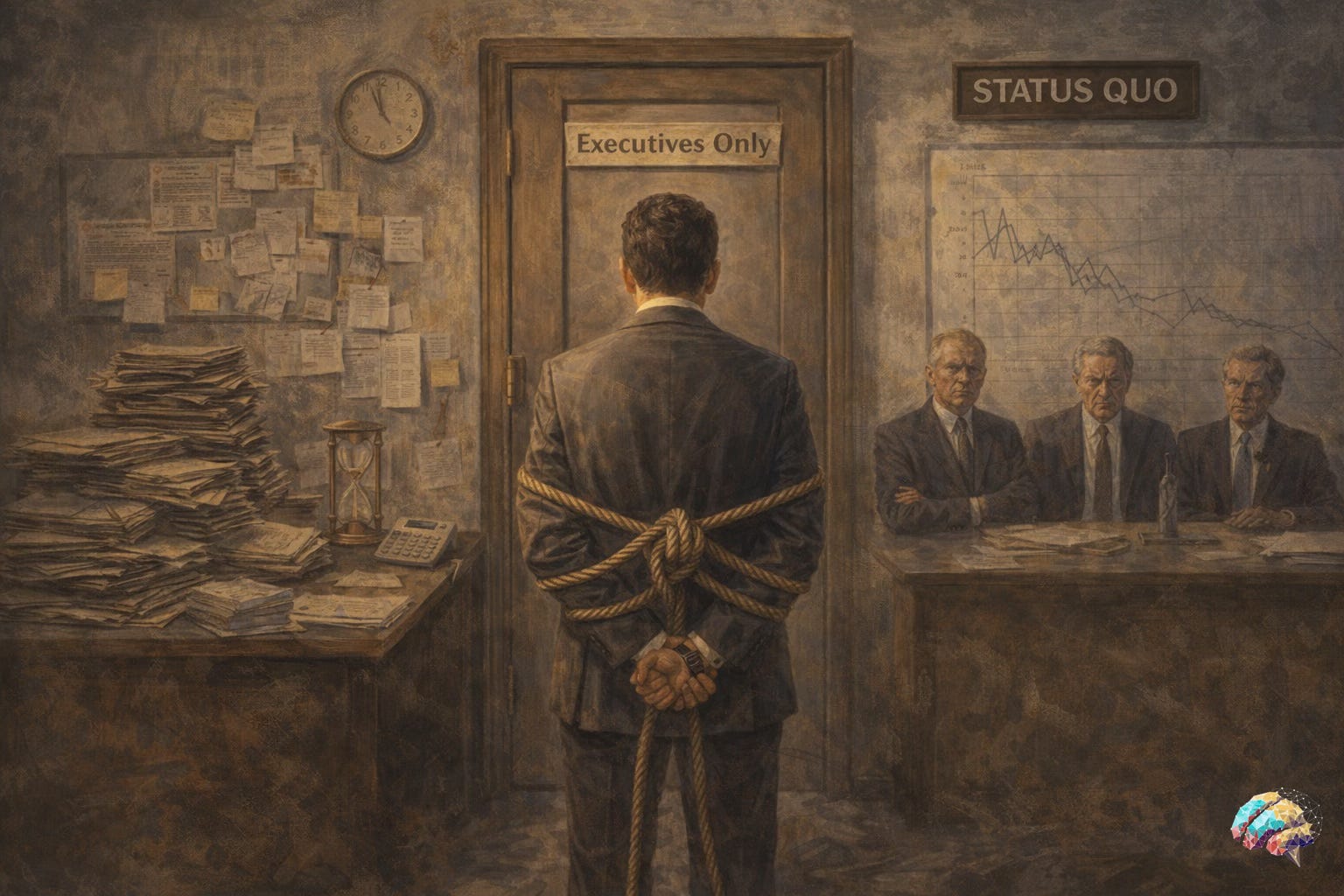
When fear becomes the dominant emotion, groups rarely behave like the group at Fukushima. People become more cautious about what they say, what information they surface, and who they share it with. Decisions drift upward and accountability drifts away. What looks like coordination from the outside can be little more than compliance.
Friend of the Innovation Show, Clark Gilbert offers a useful way to understand what happens to organisations under pressure. In his research on newspaper companies facing digital disruption, he distinguished between resource rigidity and routine rigidity.
Resource rigidity shows up when organisations fail to shift investment patterns. Money continues to flow into the old business even as the threat becomes more visible.
Routine rigidity is when the work stays the same, even as everything else changes. Even when leaders accept that change is needed, they continue to rely on the same metrics, assumptions and operating habits that belonged to the previous world.
You do not change business models without changing mental models.
Gilbert’s key insight is that threat affects these two forms of inertia differently. It can loosen the first and tighten the second. Resources may indeed be liberated, forcing organisations to move money and management attention, while routines harden, alternatives narrow and people fall back on familiar patterns. A company can invest aggressively and still fail to adapt the underlying routines that shape its response.
That is why threat can create activity without adaptation. Budgets move, priorities reshuffled and urgency rises, but the logic of the organisation stays the same. People keep using old mental models to solve new problems. The company looks busy, even decisive, but learning stalls and the range of possible responses shrinks.
What happened at Fukushima was not just operational, it was emotional. A group found a way to align under pressure rather than fragment beneath it.
Our guest on the Innovation Show, Nokia scholar Quy Huy has made a similar point in the context of strategy. Leaders, he argues, pay far too little attention to collective emotion, the shared emotional tone that shapes how groups think about strategy and how they execute it. Most give it lip service. Yet this is often where adaptation succeeds or fails.
And that brings us to Nokia.
Nokia and the Cost of Unmanaged Emotion
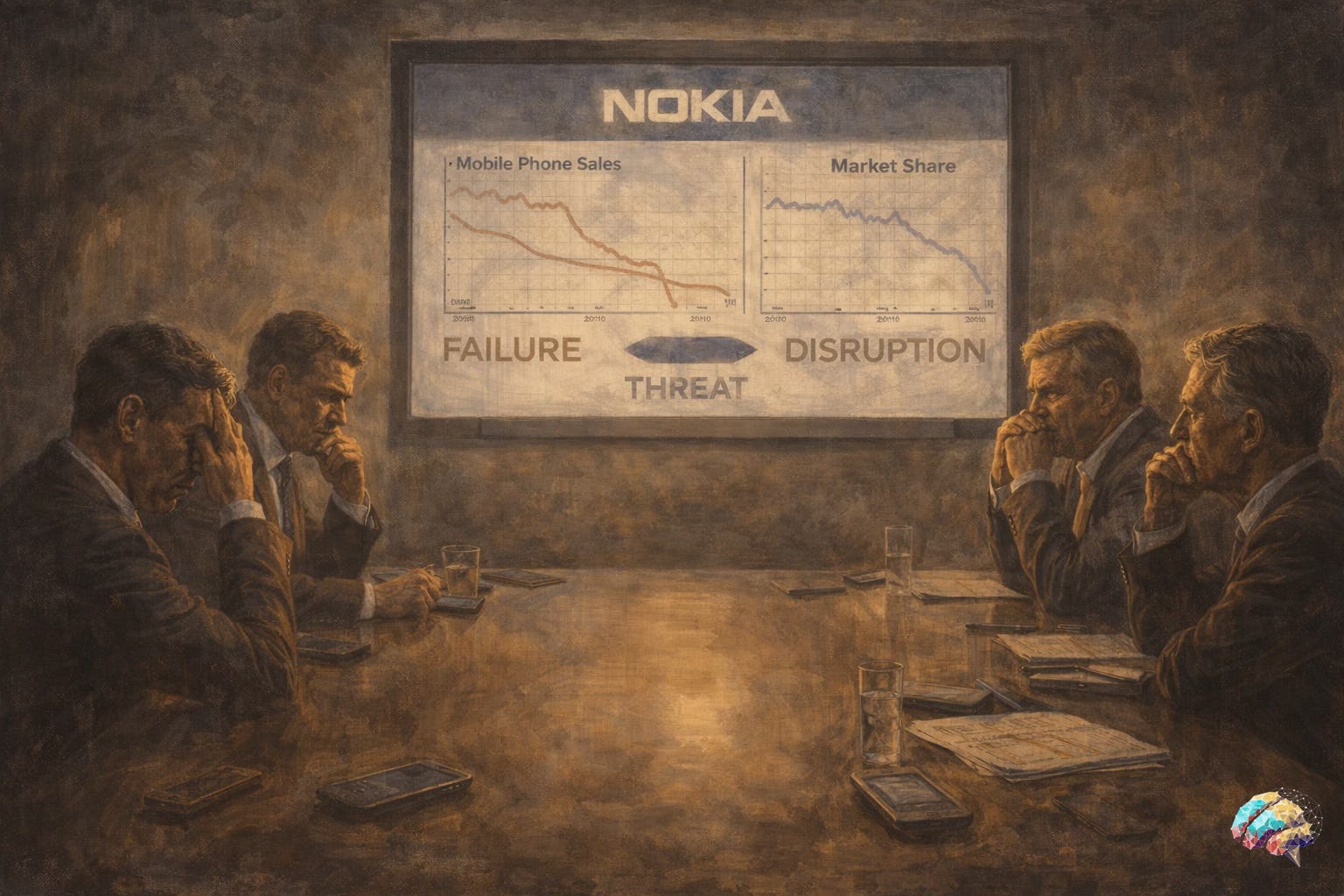
For Nokia, the issue was not ignorance, the signals were clear. Engineers, strategists, even the CEO could clearly see what was coming. They understood the competitive landscape, they consulted the world’s best thinkers, but fear was spreading through the organisation.
Fear showed up as silence. Bad news dissipated as it moved up the organisational echelons. Over time, the organisation was not allowed to have an honest conversation with itself.
What made this more dangerous was that the fear operated on two levels. There was fear of the problem itself, the growing evidence that the mobile business was falling behind. But the deeper fear was speaking about it. People could see it, but hesitated to surface it.
As Quy Huy and Timo Vuori argue, what leaders feel shapes what they see. When emotion narrows perception, even obvious threats can remain invisible in plain sight.
This is where emotional contagion turns from an asset into a liability. The same mechanism that allowed Fukushima workers to align under pressure worked in reverse. Instead of coordination, you get caution. Instead of shared purpose, you get self preservation.
The organisation kept moving. Products were launched. Roadmaps were updated. Meetings were held. But truth stopped travelling to the very people who needed to acknowledge it.
And once truth stops travelling, decline is well underway.
In our finale episode of The Innovation Show with Quy Huy and Timo Vuori, we explore Nokia’s recovery. The key takeaway was simple. Leaders often see the truth, but fear changes whether it gets spoken.
Steven Kotler on Flow States:
Clark Gilbert on Rigidity
A related private session is coming up on the 31st March.

Paid Subscribers and I, will be joined by Greg Satell, author of Cascades and Mapping Innovation, to explore a question at the heart of this piece. How does truth move through an organisation, and what stops it?
The Fukushima and Nokia stories show two very different forms of contagion. In one, effort, trust and shared purpose spread through the group. In the other, fear narrowed communication and made reality harder to name. In both cases, the issue was not just information. It was what the system allowed to travel.
That is why Greg’s work feels so relevant here. Change does not spread because an idea is good. It spreads when the conditions allow signal to move without being drowned out by hierarchy, politics, noise, or self protection.
Ahead of the session, I recommend Greg’s Fast Company article on mastering the three types of power needed to move ideas forward.
March 31st 2026
4:00 PM Irish | 5:00 PM CET | 11:00 AM EST | 8:00 AM PST
If you’d like to join, just reply and I’ll add you to the list.