
The Pickled Fish Problem
Why the version of a person we carry is often mistaken for the whole
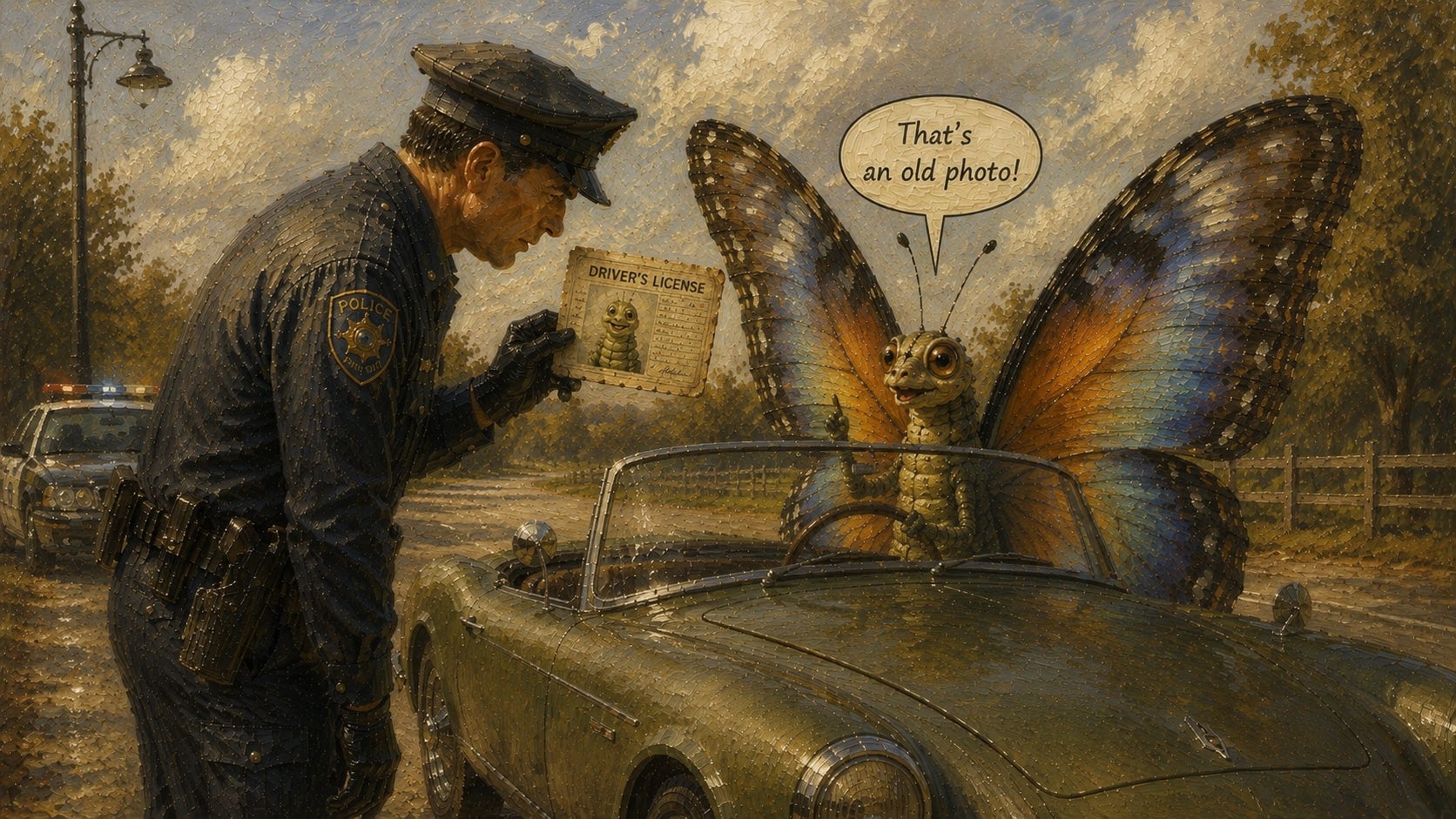
TL;DR: Sometimes we meet people in a single context, perhaps during a hard chapter of their life, and then freeze-frame them there forever. The bully in the schoolyard may be going home to a house coming apart. The annoying co-worker might feel the need to ensure they are heard. We "pickle" the version we encountered, and the verdict sets in stone. None of this excuses real harm they inflict, and what someone did to us is hard to not experience and even harder to unfeel. But people do change, and the specimen we keep pickled in the jar can update. Steve Jobs is a classic case. The colleagues he psychologically wounded at NeXT were not wrong about the man they knew at that period, only wrong to take that man for the end state.
“The man with his pickled fish has set down one truth and has recorded in his experience many lies.” — John Steinbeck, The Log from the Sea of Cortez
The Jar

In the spring of 1940, the novelist John Steinbeck spent six weeks aboard a chartered sardine boat in the Gulf of California, collecting marine animals with his friend the biologist Ed Ricketts. The trip became the foundation for his book The Log from the Sea of Cortez. For all its tide charts and specimen counts the book was a meditation on how observation distorts the very thing it sets out to capture.
A fish preserved in formalin keeps one kind of truth. Its shape holds, but what the jar cannot preserve is the texture, the smell, the way the animal moved through water.
The jar freezes the creature at whatever stage it was caught in, and some creatures change past all recognition. Buckminster Fuller made the point that there is nothing in a caterpillar that tells you it is going to be a butterfly. The specimen in the jar is an accurate record of a stage, and no guide at all to the life it would have flown off into.
That is a pretty apt description of what we do with people.
The People We Keep in Jars
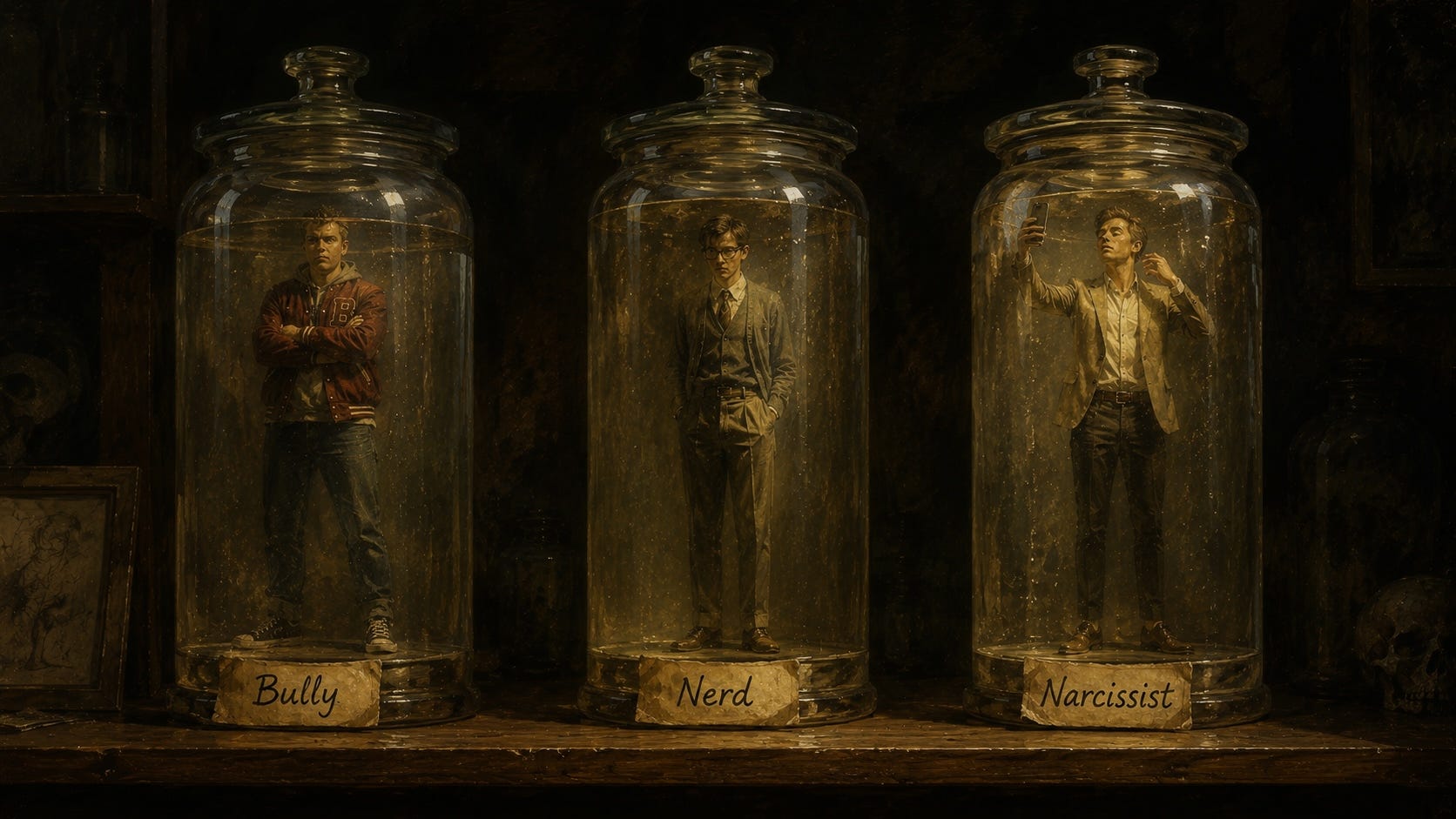
"People who do crazy things are not necessarily crazy." — Elliot Aronson's First Law
We meet someone at a single point in their life and decide that point in time defines who they are until death. The bully from the schoolyard. The confused teenager who lost a parent. The boss who came across as cold, or vain, or cruel. We fix that version in memory and consult that record for years, confident we have seen the essence of the person, when what we have seen is a moment.
There is a name for the habit we all form. When someone behaves badly, we reach first for their character flaw rather than the situation they are in. He interrupted because he is arrogant, not because the meeting punished hesitation. She hoarded information because she is political, not because the culture rewarded it. We read conduct as character and rarely stop to question the context. The psychologist Lee Ross called it the fundamental attribution error, and former Innovation Show guest Elliot Aronson built further on the idea. Aronson shared how we extend our close friends the benefit of the doubt and read their bad days as circumstance, while the stranger is condemned due to their flawed character. Aronson’s first law of social psychology put it bluntly, people who do crazy things are not necessarily crazy.
A corrosive environment can make warped behaviour feel ordinary to the person living inside it. Fear can make a decent person evasive. Insecurity can manifest as arrogance. None of this excuses the behaviour, but it does complicate it.
When I was eight, a bully gave me my first black eye during my first week at a new school. I hated him at once, preserving his character in a jar. Years later, we became friendly, and years after that he shared that he was living with violence at home. The aggression I had taken for his nature was a re-enactment of what was being done to him. The verdict I had set in stone was true about the moment and not about the boy.
The preserved fish tells one truth, but it hides the many others.
Steve Jobs in Formalin
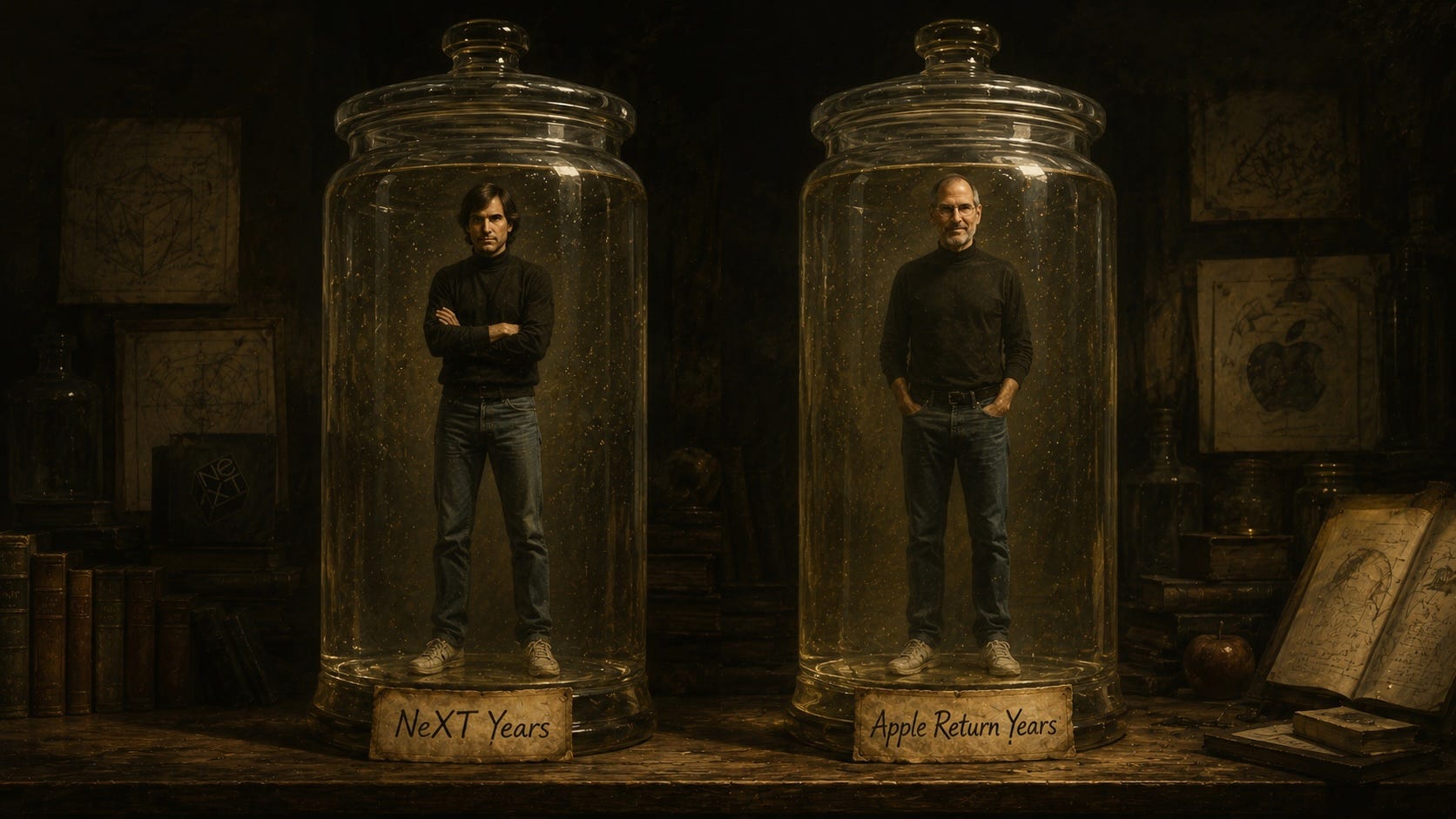
Steve Jobs is usually discussed as though he were a fixed specimen, and the people best placed to fix him that way were the ones who worked with him at NeXT. Geoffrey Cain collected their accounts in his new book Steve Jobs in Exile, and what follows is drawn from his reporting. He could be brutal, and it landed hardest on the people who admired him most.
Dan’l Lewin had built Apple’s education business and was rising fast there when Steve, freshly forced out of Apple in 1985, took him out for one of his walks and asked him to give it all up for a company that did not yet exist, run out of a barely furnished house by a founder who was not yet a legend. Lewin went. For years he swam upstream to build a sales force for a computer that barely existed, through Mother’s Days and Easters lost to conference rooms and the Friday dinners his wife had to fight him for. When the end came, he reached his desk to find one of his own staff holding a press release announcing his departure, written, he said, to bury him. He had to threaten the company he had helped build to stop it going out, and he went home at thirty-four still owing NeXT a hundred thousand dollars. People who gave Jobs that kind of loyalty carried what he did with it for decades, unable to forgive him. When he died of pancreatic cancer on the fifth of October 2011, the news moved through the old NeXT community in an hour, and what arrived with it was a grief tangled up with everything else.
Mark Hayes, who had run sales at NeXT, found that the anger he had bottled up for twenty years suddenly had nowhere to go, and in its absence he began to look more generously on what Jobs had built. Ron Weissman, NeXT’s former marketing director, walked out of a client meeting and sat in his car for forty minutes, unable to picture a world without him. These were not sentimental men, and they had earned their resentment. That even they sensed something larger than the version they had kept suggests the jar was never the final story.
What followed was not a tidy redemption arc, because lives rarely run that way.
What Exile Did
Geoffrey Cain titles one of the chapters of his account “The Two Steves”. Nobody who had known the first one could have predicted the second. The people closest to him were the ones who got to watch the second Steve arrive.
The same Dan'l Lewin, the cofounder Jobs had once tried to bury, writes in the book's foreword that the years after his own departure were the ones that altered Jobs. In that window Jobs married, went on having children, learned what it was to be a father, and buried both of his adoptive parents. When Jobs’s father died in 1993, Lewin was among fewer than ten people at the burial. At breakfast soon afterwards, Jobs arrived a little late and opened, unusually, with “You were right.” Lewin asked about what, recalling years of argument over building the company. “Family,” Jobs said.
The afterword is plainer still. By 1991, with his marriage to Laurene Powell and the birth of his son Reed, family life had settled, and Cain credits this period with a trait he had doubted Jobs could ever develop, which was genuine empathy. The hard edges softened. He grew careful about how feedback landed, and when a collaborator left a conversation hurt, he would walk them around the campus to hear them out. Mike Slade, who worked beside him again at Apple and had a front-row seat to Steve’s transformation, watched the old “you’re fired” tantrums recede. Steve stayed a demanding boss, but he stopped humiliating people in the process and learned to delegate to lieutenants he trusted. Slade’s verdict was flat and exact. He had made a lot of mistakes at NeXT, and he decided not to make any of them again.
Jennifer Chatman shared on this week’s Innovation Show that the early Jobs is a near-textbook specimen of a grandiose narcissist, all entitlement and certainty and borrowed credit. Her test for telling a visionary from a narcissist comes down to a single question: “Who have you brought along with you, and are any of them still there?” The narcissist leaves a revolving door of discarded allies and no one who stayed. By that measure Jobs is an outlier, because by the end of his career (and life) he had a senior team of thirteen who had stayed with him for thirteen years. What Mike Slade watched from the front row, Chatman studied from the outside. Whatever Jobs had been early in his career, he had learned to modify the behaviour. The diagnosis had been accurate, but it eventually went out of date.
None of this erases the earlier Steve, and none of it asks those impacted to forget what he was capable of. It only suggests we think about a truer picture. The jar can outlast the fish. One caveat is that hardship does not reliably make people gentler. Struggle can harden a person as much as it deepens them. What it does, without fail, is move them, and that movement can often make an initial judgement stale.
People Are Not Specimens

“Stasis, the opposite of change and flux, is incompatible with life.” — Iain McGilchrist, The Master and His Emissary
I wrote this piece because I have been judgemental of certain people and truthfully still hold fading resentment towards those who have wronged me or who I believe have. Sometimes others will recommend, “No man, he has changed, you should talk to him.”, I choose to stick to my frozen moment version. However, as you age you do realise that people behave less like statues and more like ecosystems, where changing the conditions changes which qualities surface.
Take away fear and someone can turn generous. Hand someone responsibility and they might grow into it. Drop them into surroundings that reward cut-throat behaviour and punish candour, and the worst of them rises to meet those conditions. The same person can be the difficult colleague in one company and, a year later in a healthier one, the calm and generous one whose old workmates barely recognise the description.
One decade, one workplace, or one bad season does not label someone forever, although there are always the few.
The specimen is not the animal.
On this week’s Innovation Show, we focus on the intriguing paper Transformational Leader or Narcissist?, by Jennifer Chatman and friend of the show and regular guest Charles O’Reilly. It follows our two-part series with Geoffrey Cain on his book Steve Jobs in Exile, the source of the Jobs story told here. And the episode with Elliot Aronson on his classic The Social Animal sits behind the question of why we freeze people in the first place.