
The Imprinting Trap
Nokia and the Tame Goose Problem

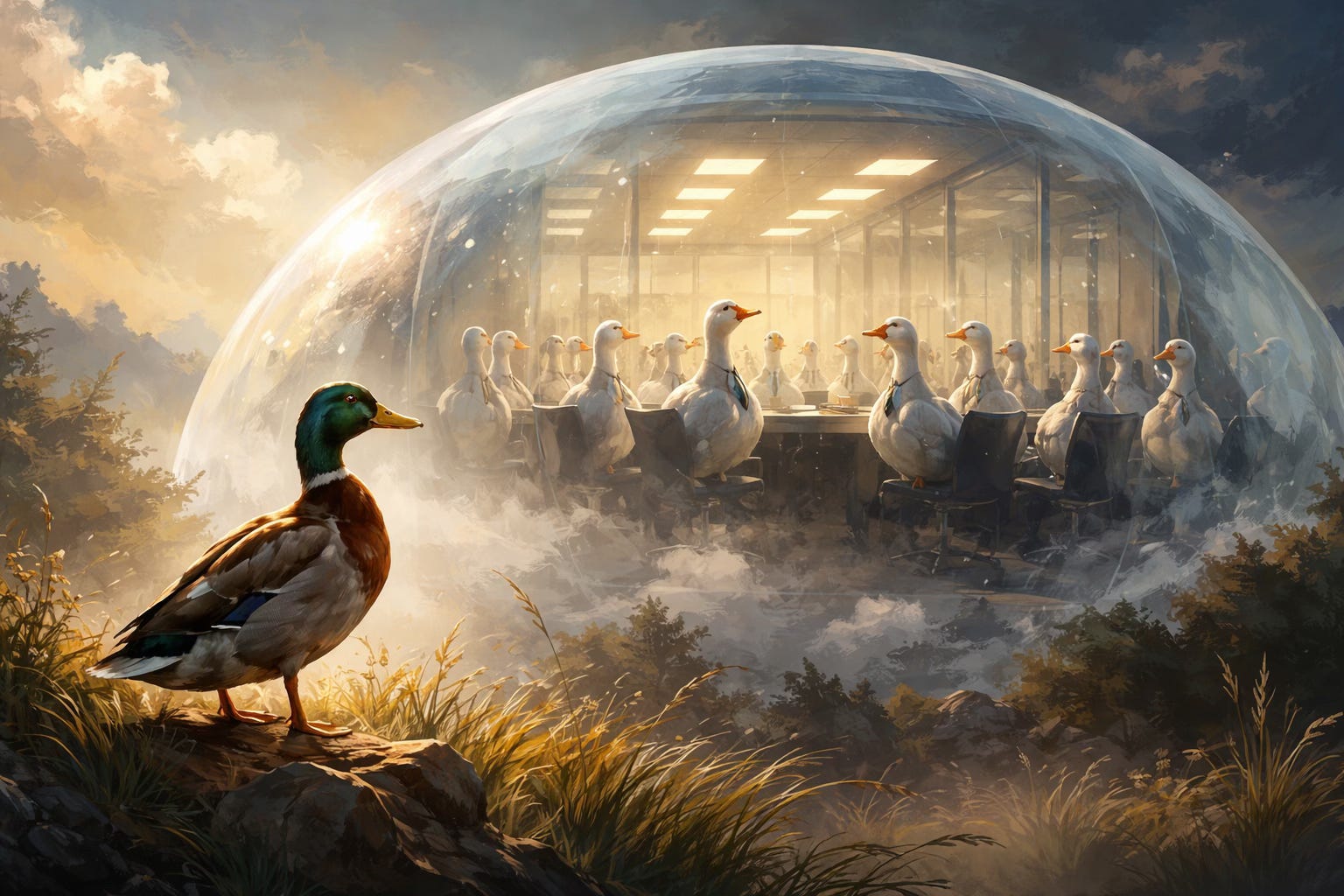
“A tame goose never becomes a wild goose, but a wild goose can certainly become a tame goose.” - Søren Kierkegaard, 1854 (goose is often misquoted as duck)
A parable often attributed to Kierkegaard tells of a flock of geese living inside a comfortable barnyard with high walls. They began as visitors to the barn, but after several visits they decided to stay. Who could blame them? The corn was plentiful and the enclosure felt secure, so the geese never risked flying beyond it.
One day an outsider goose arrived and began delivering weekly lectures about the great world beyond the barnyard. He reminded them that their ancestors had crossed oceans and deserts on powerful wings. He spoke about the beauty of flight and the freedom of the open sky.
The geese loved his talks. They analysed them, debated them and wrote thoughtful reflections about flight.
But they never actually flew.
The story captures something uncomfortable about comfort. Safety protects us, but it gradually reshapes behaviour. The walls begin to feel like the natural order of things and we mistake the edge of the rut for the horizon. The instincts that once kept the flock alive atrophy because the environment no longer tests them.
That is until it does.
In 1873, the British amateur biologist Douglas Spalding noticed that young birds tended to follow the very first moving object they saw. Ideally that object would be their mother, but if it happened to be something else the chicks would still adhere to the rule.
A few decades later, in 1911, the German biologist Oscar Heinroth made similar observations, reinforcing the idea that early experiences could shape lasting patterns in animals.
In the 1930s, Heinroth’s student, Konrad Lorenz named this phenomenon imprinting (Prägung). Lorenz studied it in depth, showing that there was a brief but critical window just after hatching when a gosling would “choose” its guide. Once that choice was made, it was imprinted. Even if separated later, the gosling would continue to follow either its mother or Lorenz himself, depending on who it had first encountered.
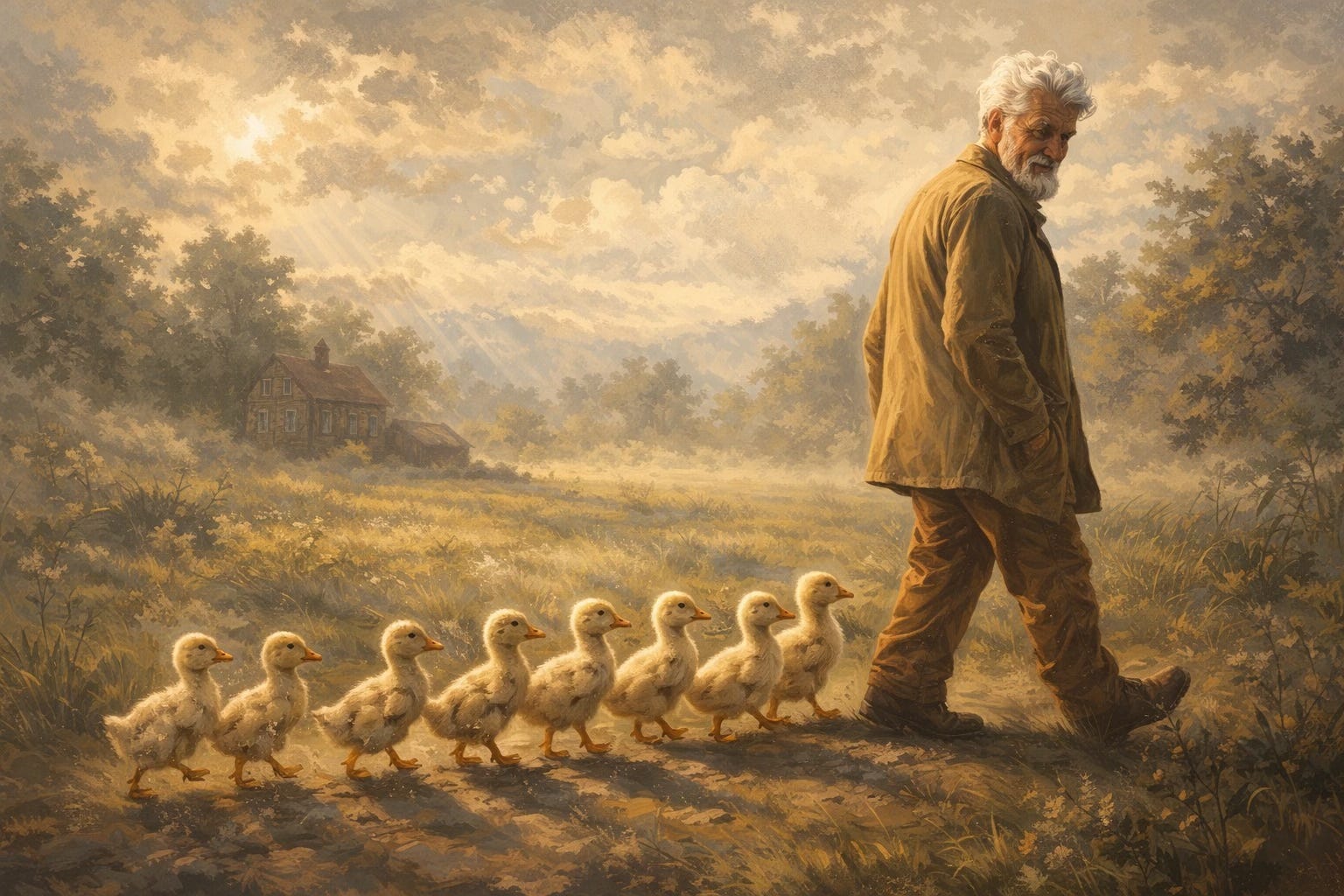
Imprinting is one of nature’s shortcuts. A newly hatched animal does not have the luxury of extended reflection. It needs a rule that reduces uncertainty and improves its chances of survival. Stay close to the first guide!
In a stable environment that rule works beautifully. The difficulty is that what begins as guidance can slowly turn into attachment. Once the pattern is established it becomes difficult to rewire.
The pattern is not confined to barnyards.
Organisations develop something similar. When a company finds success, it imprints on where to look for opportunity and what threats really matter. Over time those instincts become culture. What began as an emergent strategy gradually becomes the organisation’s first guide, and leaders continue moving confidently in a direction that once made perfect sense.
That becomes dangerous when, like Kierkegaard’s geese, the walls that once made the barnyard safe begin to crumble.
Nokia offers a striking example.
The Imprint of Success
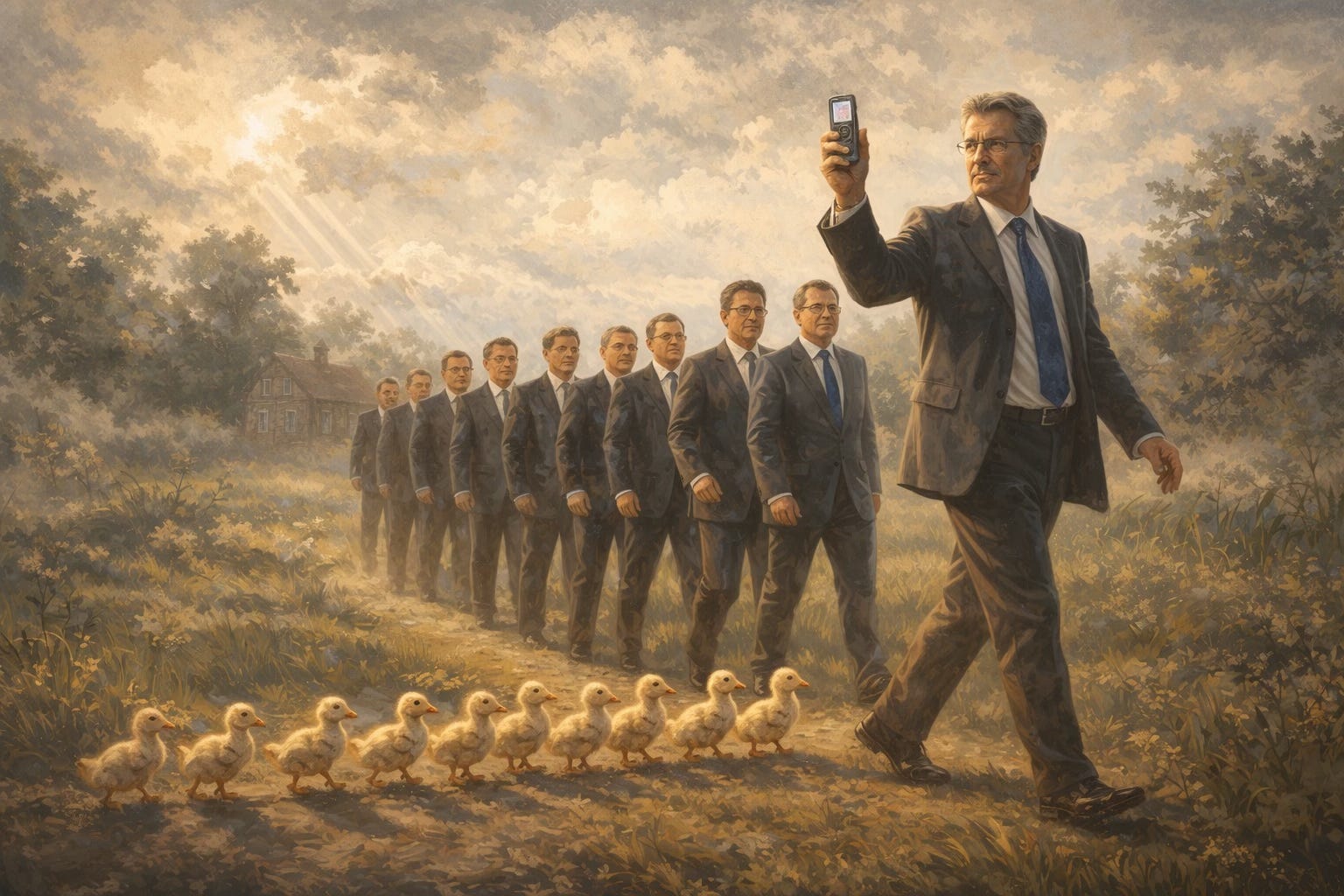
“It is difficult to get a man to understand something, when his salary depends upon his not understanding it.” - Upton Sinclair
For much of its history Nokia looked like the kind of company that would never become tamed by its own success. Reinvention had been part of its identity from the beginning. The firm started in the nineteenth century as a pulp mill, later expanded into rubber boots and cables, and eventually moved into electronics and telecommunications. Few companies had reinvented themselves so many times.
Then mobile phones transformed Nokia into something much larger.
By the early 2000s the company dominated the global handset market. Its devices were everywhere. Models such as the Nokia 3310 became cultural icons and the company’s influence extended far beyond the technology sector. At one point Nokia accounted for roughly a third of Finland’s exports and a substantial share of its GDP.
Working at Nokia carried enormous prestige. Employees represented a company that had become the pride of a nation. In Finland, working for Nokia made you a minor celebrity.
Such success shapes perception and can tame both humility and experimentation.
From the outside Nokia’s decline is often described as a failure to see the smartphone revolution coming. The reality inside the company was more complicated. Analysts and strategy leads within Nokia produced detailed reports describing the emerging threat. The documents anticipated the price wars that would follow and outlined how the market could evolve.
The signals were not faint. They were heard clearly.
One of the people involved in the internal analysis later reflected that even those who wrote the reports did not fully grasp the shift until they began using the iPhone themselves. Nokians were not allowed to use iPhones, so the implications only became clearer once the experience moved from paper to pocket.
Insulated by their walls of success, engineers compared their products with those of established competitors such as Ericsson and Sony. Within that frame Nokia still appeared technically superior. The company possessed formidable patents, world class manufacturing and a dominant market position.
Many believed that if competition intensified Nokia would simply catch up.
In our series on The Innovation Show, Gary Hamel described the situation differently.
Hamel had worked with Nokia years earlier when the company was experimenting with early mobile phone prototypes. Later, as the smartphone era began to emerge, much like the outsider goose speaking to the barnyard flock, he urged senior leaders to revisit their assumptions about the future of the industry.
The response was polite but dismissive.
By that stage many of Nokia’s executives had already become extremely wealthy. The company sat comfortably at the top of the market and its technological capabilities appeared formidable. From their vantage point the suggestion that the firm might lose its advantage sounded less like insight and more like a consultant looking for another engagement.
Inside the organisation the imprint of past success remained strong.
Managers focused on refining existing products and benchmarking them against familiar rivals. The company continued improving the very capabilities that had once made it dominant. Few people felt the urgency that might have forced the organisation to re-examine its assumptions.
One observer later described the situation as, “Too few people felt the pain.” They could see the storm on the horizon, but it still felt like weather happening to somebody else.
The absence of pain shapes how leaders interpret signals, perceive credible threats and judge which changes can safely be ignored.
The organisation keeps following the guide that once made perfect sense.
Even when the landscape has changed.
Long before the smartphone era, Thomas Watson Jr had become wary of the way organisations imprint on their own success.
Watson’s Wild Ducks (Geese)
“Success at best is an impermanent achievement which can always slip out of hand.”
— Thomas J. Watson Jr, A Business and Its Beliefs
Large organisations tame their rebels. Many of the people reading this will recognise that experience. All too often, the very engineers who once challenged assumptions gradually become managers responsible for maintaining systems. The once-barbarians become bureaucrats and the pirates become the navy. Over time the organisation grows more efficient, more coordinated and less tolerant of disruption. Those who deviate from the imprinted paths are literally labelled deviants and as a result are a misfit for the organisation. Those who follow the well-worn path succeed, but risk becoming tamed by comfort.
Watson believed something important was lost in this inevitable process.
In A Business and Its Beliefs, 1963, he retells a story drawn from Kierkegaard. A man living on the Danish coast began feeding wild ducks in a pond. At first they visited briefly during migration. Over time some stopped flying south altogether. The free food was easier than the long journey.
Year by year they flew less.
Eventually they grew so comfortable that flying became difficult. When migrating flocks returned each autumn, the tame ducks would circle briefly in greeting before settling back onto the pond.
Watson tried to guard against that fate.
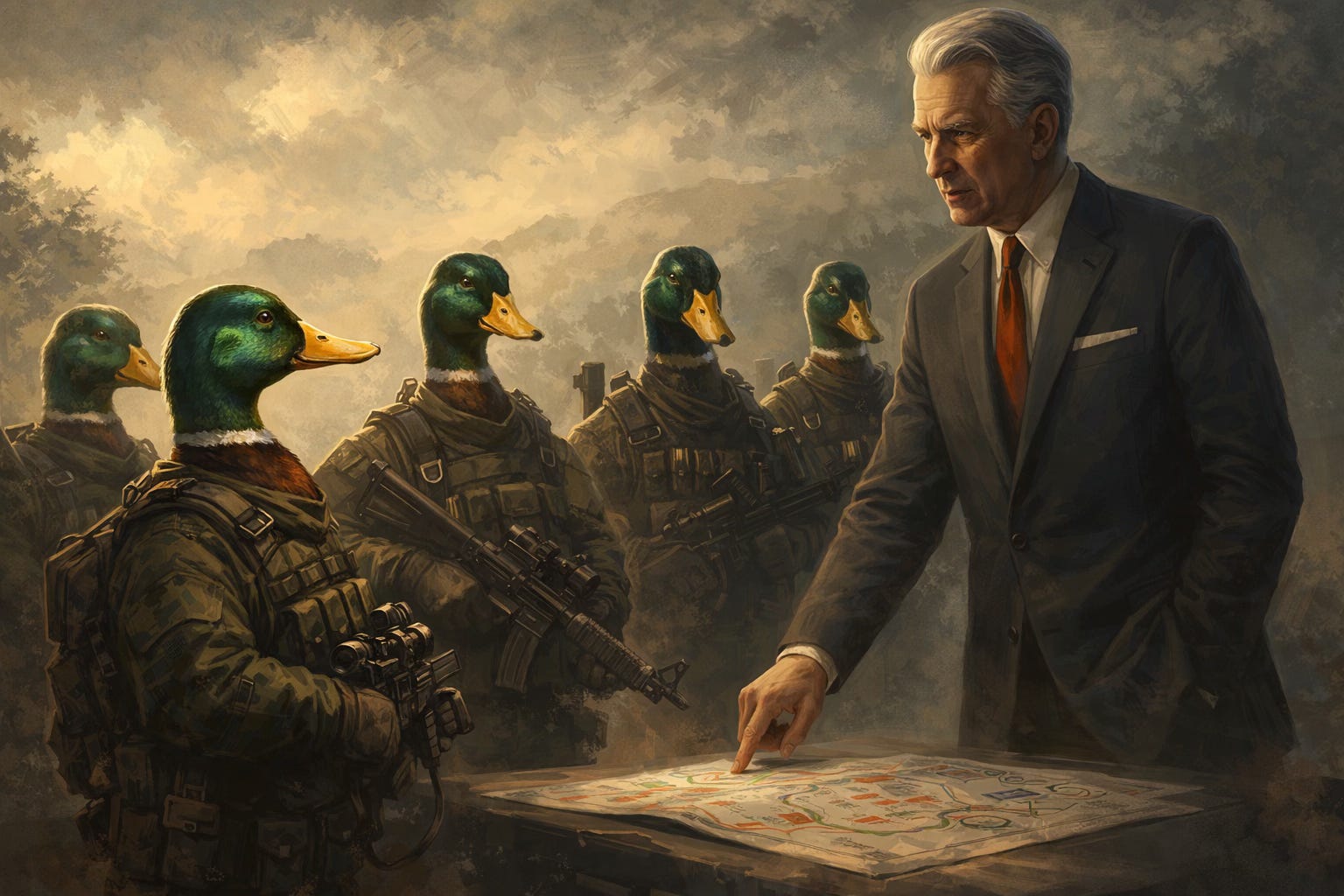
In the 1960s Watson commandeered a small group inside the company and called them “Wild Ducks”. These individuals reported directly to the chief executive and were given licence to bypass many of the company’s rules. Their role was to deviate from the beaten path and fly beyond the barnyard walls.
Watson understood that success reshapes behaviour. The same routines that once helped a company survive can become the habits that prevent it from changing.
Kierkegaard’s geese did not stopped flying because the environment rewarded staying put. The corn was plentiful. The walls felt safe.
Flight no longer seemed necessary.
Until the world outside the barnyard changed.
Organisations often discover too late that the instincts which once carried them across oceans have grown weak through disuse.
The wings are still there. They have simply forgotten how to fly.
This week on The Innovation Show, we explore the Nokia collapse through the research of Quy Huy and Timo Vuori. Their work reveals that Nokia’s downfall was not primarily technological but organisational. Fear travelled down the hierarchy, silence travelled up, and the company slowly lost the ability to hear reality.