
The Drongo Strategy
BlackBerry Connect and the Art of Delay

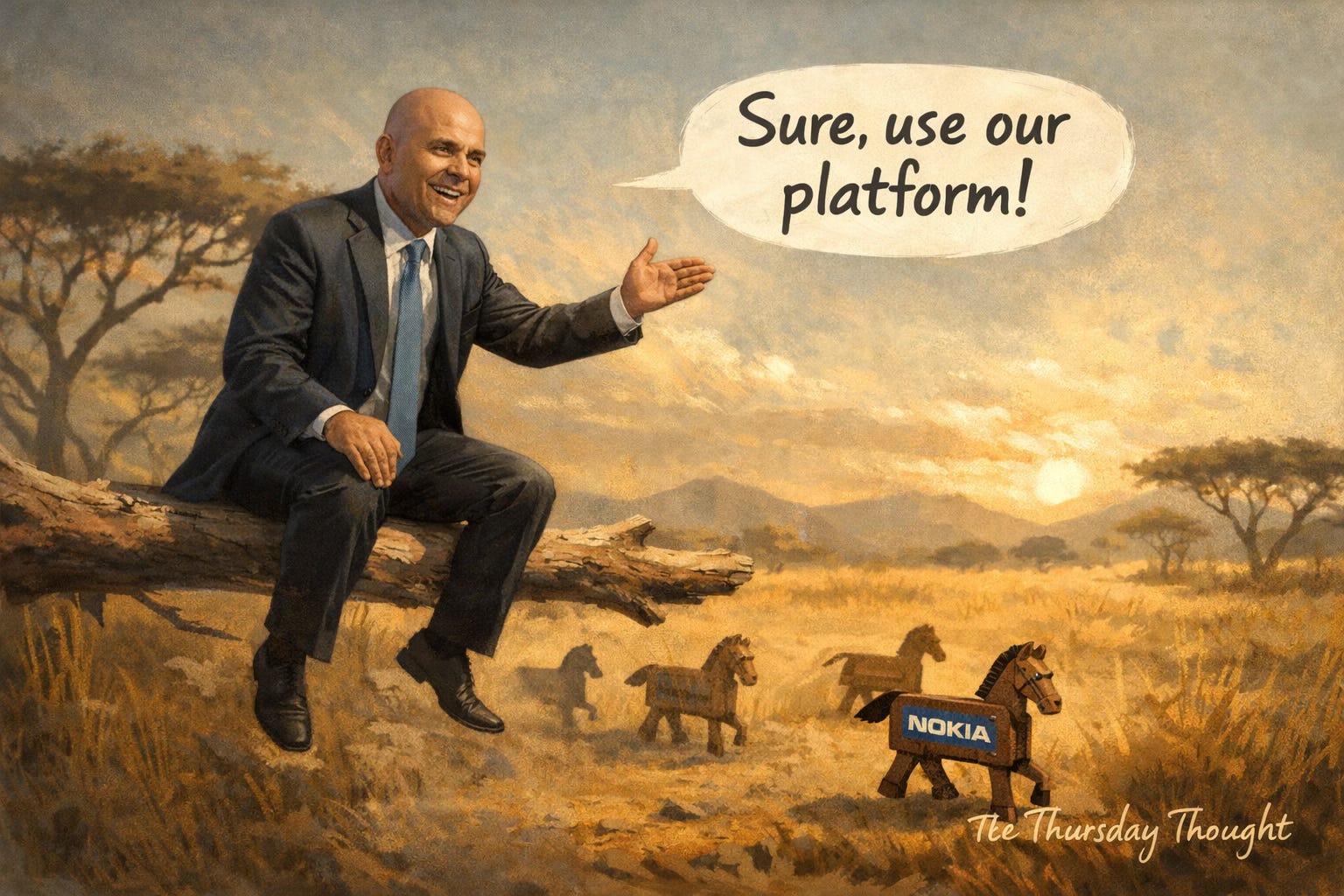
“One way or another, make the enemies trust you and thereby slacken their vigilance. Meanwhile, plot secretly, making preparations for your future action to ensure its success.” — From “The Thirty-Six Stratagems”
“Balsillie makes no apologies for a strategy he agrees “was a complete, pure bum steer.” It was the kind of “stealth tactic, pure Art of War,” he says, that RIM needed to protect its core business. His tactics, he says, were no different than the cold-blooded manoeuvres of Silicon Valley giants. “Show me how else you build a $20 billion company.” - Jacquie McNish, author “Losing the Signal”
In biology, a signal is any behaviour or trait that one animal, the sender, uses to alter the behaviour of another, the receiver. Most signals stay honest because honesty keeps the system working. Warning calls help a group survive. Mating displays help select the fittest partners. Sender and receiver both gain.
But signalling has a shadow side.
Some signals aim to deceive. A chess player might give up a piece to win the position. In nature, a sender can guide a receiver into a costly reaction that pays the sender back later. The fork tailed drongo shows how cleanly this can play out.
The Drongo Strategy
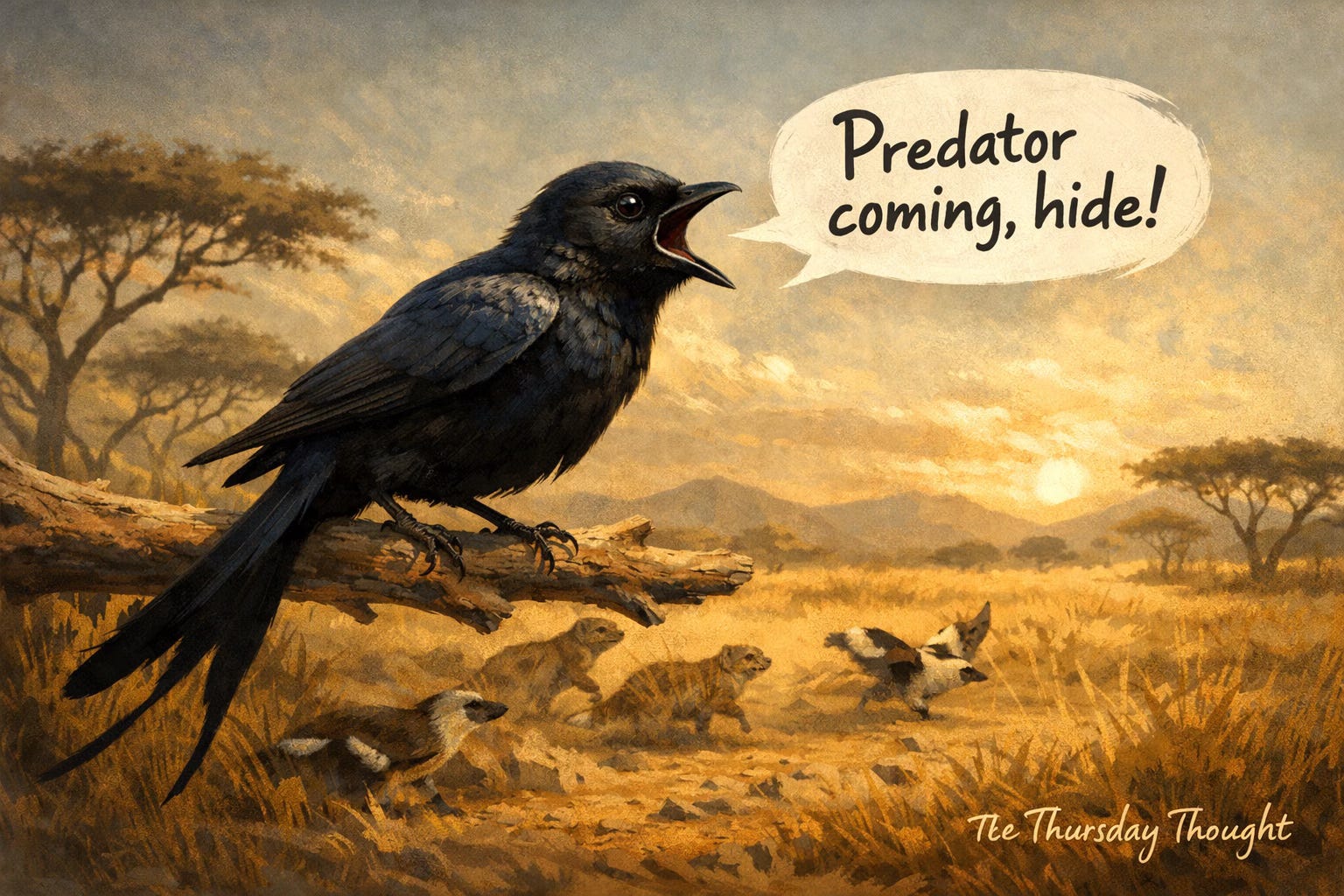
“All is fair in food and survival.” - Drongo Bird (unverified :)
Out in the Kalahari Desert, the freeloading drongo wants the food, but doesn’t want to do the work. Instead, she has figured out how to get others to put in the hard yards.
She trails a group of foraging Meerkats nosing through the sand. Then, when something edible finally turns up, she plays her hand. She sees an eagle circling overhead and announces a sharp alarm “Predator coming, hide!”
The first time, the warning is true and the grateful Meerkats vanish into burrows and brush. She has earned their trust, she is a helpful ally. And once that reflex is trained, the drongo cashes it in.
She spots a Meerkat unearth a juicy grub. She sounds the alarm, and the trusting Meerkats don’t even verify it. But this time the sky is empty. The scrambling Meerkat drops his grub and the drongo gobbles it up.
Now, the drongo has revealed her hand and has lost trust, but still has another trick in her feathers. The drongo doesn’t rely only on its own call; it can mimic the alarm calls of other species, including meerkats. Next time, she mimics the sound of a Meerkat sentry scouting for threats and the whole group darts for safety. This time the drongo enjoys a juicy scorpion in the hot desert sun.
This blend of trust earned, voice borrowed, reaction triggered is more than a strategy in Nature. Many of us have fallen prey to snakes in suits, narcissist business partners who benefitted from our hard work or opportunistic investors who drain our company resources.
The drongo’s (or narcissist) trick works because it never asks for permission. It doesn’t need to overpower the meerkat. It doesn’t even need to persuade it. It only needs to trigger the one reflex the meerkat can’t afford to ignore.
Which is why, when you read the old Chinese line, it doesn’t feel like poetry. It reads like field notes.

“One way or another, make the enemies trust you and thereby slacken their vigilance. Meanwhile, plot secretly, making preparations for your future action to ensure its success.” — Stratagem 33 from The Thirty-Six Stratagems
Kaihan Krippendorff takes that same idea and pulls it into modern life with a book title that makes a powerful statement Hide a Dagger Behind a Smile. The move is reassurance, where a competitor offers something that looks helpful, even generous. Once they relax, the real advantage gets built.
I also enjoyed the framing from Rita McGrath and Ian MacMillan in The Entrepreneurial Mindset. They describe a related competitive move as a gambit. This is a visible concession in one arena, made to pull rivals into investing time and resources there, while you quietly strengthen position somewhere else that matters more.
Same pattern. Different language. In the desert? it’s a bird borrowing an alarm call. In business? The use of a platform offer that appears to be openness.
In the early 2000s, Research In Motion ran a version of it through a programme called BlackBerry Connect.
BlackBerry Connect
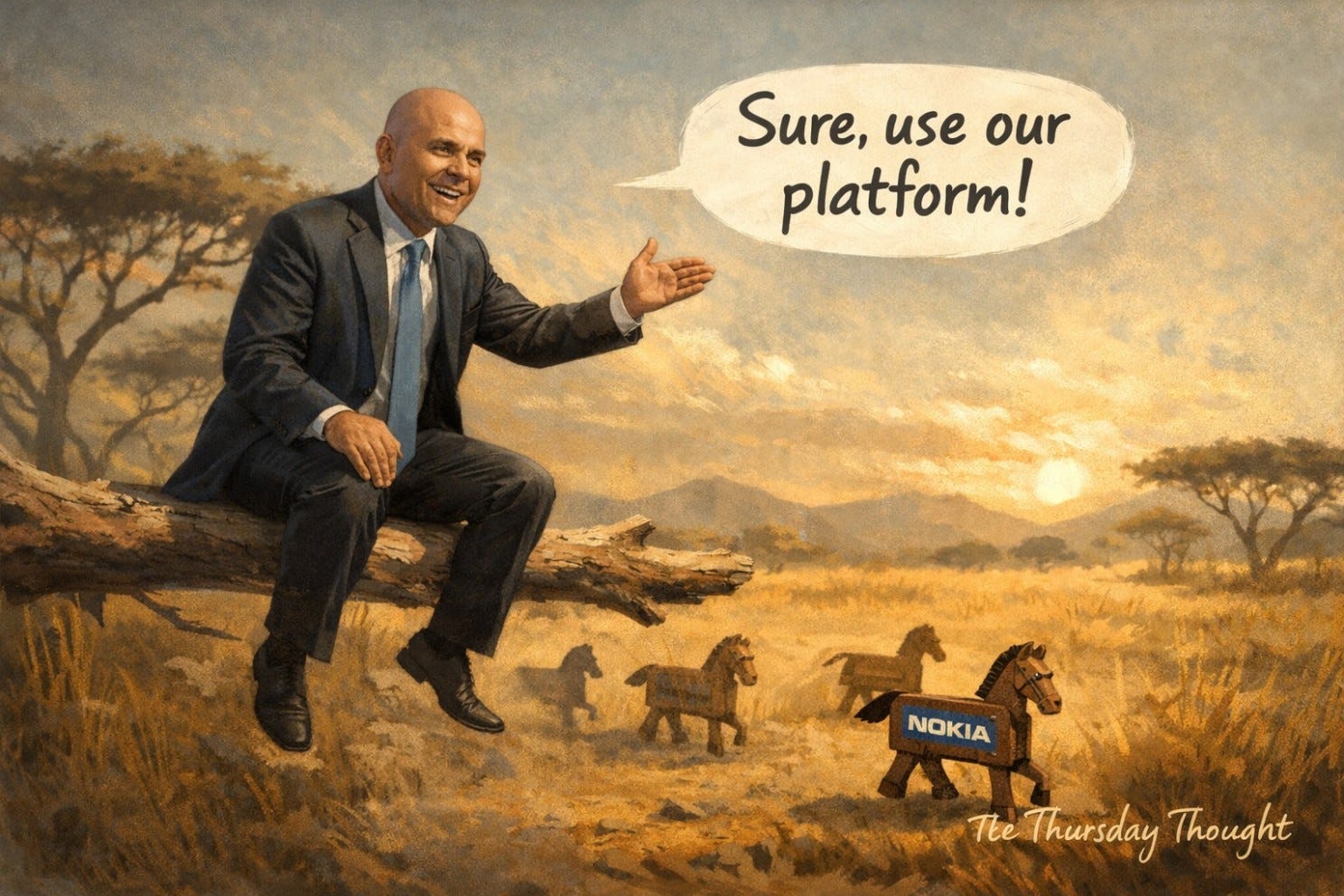
“Balsillie makes no apologies for a strategy he agrees “was a complete, pure bum steer.” It was the kind of “stealth tactic, pure Art of War,” he says, that RIM needed to protect its core business. His tactics, he says, were no different than the cold-blooded manoeuvres of Silicon Valley giants. “Show me how else you build a $20 billion company.” - Jacquie McNish, author Losing the Signal
At its peak, Research In Motion had what every incumbent wants and eventually fears with a lead so large it started to frighten the ecosystem around it. Carriers and enterprise customers didn’t want another dominant platform with the power to tax access and dictate terms.
So when RIM announced it would “open” its e-mail system to other handset makers, it landed like reassurance. A smile, a signal of openness, but it was a false signal. On paper it looked very generous, competitors could build their own keyboard phones, and RIM would provide the software and the link into its network, in exchange for licensing fees.
They called it BlackBerry Connect, it was Balsillie’s very own “drongo play”.
Connect wasn’t designed to strengthen competitors. It was designed to occupy them. Get rivals to pour engineering cycles into becoming “BlackBerry-enabled” and you achieve something more valuable than a short-term licensing fee: you steal their time. While they build around your system, they delay building their own. While they wait for your software drops, their roadmaps warp around your cadence. While they sell the promise of interoperability, you keep the enterprise relationship anchored to BlackBerry.
The drongo doesn’t win by taking the whole carcass. It wins by getting others to drop the meal.
If you want to see how the other side feels when the alarm call turns out to be theatre, look at Nokia.
Nokia wanted a shortcut into the US enterprise market. BlackBerry Connect looked like the obvious door. Bolt BlackBerry email onto Nokia hardware and suddenly you have credibility with corporate buyers. Nokia committed hard. Years of effort. Millions in development and manufacturing. A pipeline of parts moving towards factories.
RIM delayed software deliveries. When code eventually arrived, it often lagged behind the latest BlackBerry features. Nokia’s frustration escalated into a meeting at its Helsinki headquarters where an executive pointed to a world map and described the real cost of delay. Ships already heading to manufacturing plants. Inventory soon to be Nokia’s problem to own. Still no usable software in the plant.
By the summer of 2004, Nokia was in a panic. One week before Nokia was finally about to launch its BlackBerry phone with Spanish carrier Telefónica, Nokia discovered RIM had not negotiated an agreement with the carrier to deploy the product. Without a deal, Telefónica wouldn’t let Nokia BlackBerry phones onto its network. Instead the Spanish carrier opted to buy conventional BlackBerrys directly from RIM. The drongo call had worked. Not a single Nokia Connect phone had been activated by September 1, a huge disappointment for a handset maker that planned to sell 150,000 of the phones that year.
That was the moment the (Nokian) meerkat stopped running and understood the ruse.
Panu Kuusisto, who managed Nokia’s Connect agreement, later described the dawning suspicion that the programme was “a plot” and that Nokia was being “abused”. He admitted, with a kind of late arriving clarity, “We were so ignorant that they must have been just laughing at us.”
The hidden cost was more than just embarrassment. Nokia did not even begin developing an in house e mail alternative for at least another year.
Then, two years later, in 2006, Kuusisto ran into a former RIM executive at an industry conference. He had left RIM by then, and confirmed Kuusisto’s suspicions about what Connect really was. Kuusisto said he felt relief at the confession, and he also noted the personal consequence, that his career at Nokia stalled after the fiasco. All he had was closure, “I was glad he confessed what was going on.”
Other BlackBerry Connect partners did not fare much better. About forty different Connect phones were designed and none sold well.
Remember that the drongo does not need to defeat the meerkat, it just needs the meerkat to run (and squander resources).
RIM did not need Nokia to lose a head to head fight, just for Nokia to be occupied long enough that the real threat arrived late. The stolen resource was more than market share,it was time.
Most leaders look for danger in obvious places, pricing moves, product launches, headline features. Stratagem 33 lives in the signals that change what you do next.
A useful question for leaders to consider (especially when someone offers you openness wrapped in generosity) is “What behaviour does this signal trigger in me, and what might I drop while I react on reflex?”
On this week’s Innovation Show, we go inside the rise and fall of BlackBerry with Jacquie McNish, co author of Losing the Signal. We talk outages, power plays, carrier politics, and the human story behind the headlines.
CHANGE OF DATE LIVE EXCLUSIVE SESSION

Not all resistance is friction. Some of it is a false signal.
Sometimes the thing that slows you down is misdirection.
Signals that look helpful, advice that sounds credible and efforts that pull you off course.
If you’ve ever found yourself working hard on the wrong thing, you know what I mean.
On March 31st, we’ll be joined by my friend Greg Satell, author of Cascades and Mapping Innovation, to look at how change actually spreads and how to move ideas forward without getting derailed by noise, politics, or well-meaning distraction.
Ahead of the session, I suggest reading Greg’s Fast Company piece on getting people to listen to your ideas. It will sharpen your instincts for what to follow and what to ignore.
March 31st, 2026
4:00 PM Irish | 5:00 PM CET | 11:00 AM EST | 8:00 AM PST
If you’d like to join, just reply and I’ll add you to the list.